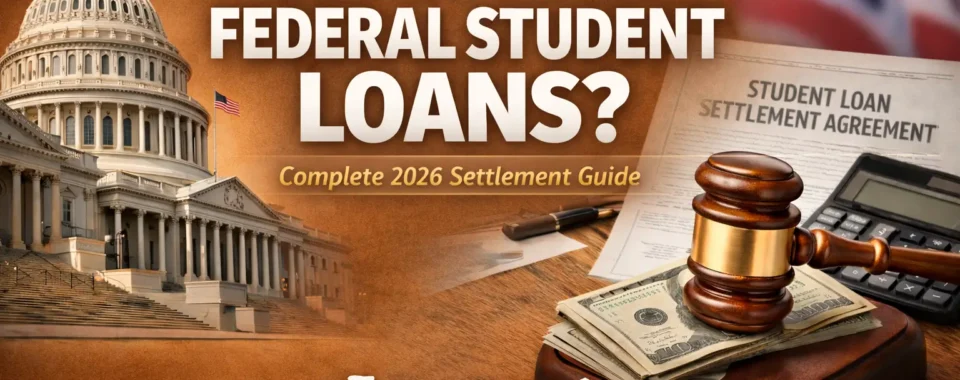
Can You Settle Federal Student Loans? Complete Guide to Legal Settlement Options
Yes, federal student loans can be settled, but usually only after default. Settlement involves negotiating a reduced lump-sum payment with the Department of Education instead of paying the full balance.
In short, settlement is possible—but it’s not the first or best option for most borrowers. Before choosing a settlement, many borrowers explore repayment plans or forgiveness programs.
For a broader overview of student loan relief strategies, see our pillar guide:
Complete Guide to Student Loan Help
Summary of Federal Student Loan Settlement Rules
- Federal student loans can be settled, but only in limited situations (mostly due to default).
- Settlement usually means paying a reduced lump sum agreed with the U.S. Department of Education.
- Forgiveness programs are often better than settlements for long-term savings.
- Defaulted borrowers have 3 official settlement options.
- Income-Driven Repayment (IDR) can be a smarter alternative before considering settlement.
What Does Federal Student Loan Settlement Mean?
Federal student loan settlement means negotiating with the U.S. government to pay less than the full loan balance, usually after default.
Federal student loan settlement refers to an agreement where a borrower pays a reduced amount to resolve the total debt. Unlike private loans, federal loans have stricter rules because they are backed by the U.S. Department of Education.
Settlement typically applies only when loans enter default status (after 270 days of missed payments).
- Applies mostly to defaulted loans
- Requires la ump-sum payment
- Negotiated through loan servicers or collection agencies
So the bottom line is: settlement is possible, but only in specific circumstances and not widely offered.
Is Federal Student Loan Settlement Legal?
Yes, federal student loans can be legally settled through official government-approved settlement programs after default.
The U.S. Department of Education allows settlement under certain regulated programs. These are not informal negotiations but structured settlement pathways.
According to this resource on student loans, federal student loans are government-backed debt with unique repayment rules.
🔗 Read more: “student loan system overview.”
Three Official Federal Student Loan Settlement Options
| Settlement Option | Payment Required | Best For | Risk Level |
| Waive Collection Costs | Principal + Interest | Mild default | Low |
| Interest Reduction Settlement | Principal + Half Interest | Long default cases | Medium |
| Principal Reduction Settlement | 90% Principal | Severe financial hardship | High |
Federal settlement usually means paying most of the balance, only fees or part ofthe interest may be waived.
Here’s what matters: settlement rarely wipes out the full debt.
When Can You Settle Federal Student Loans?
You can settle federal student loans mainly after default and when full repayment becomes financially impossible.
Federal loan settlement eligibility depends on:
- Loan default status
- Financial hardship documentation
- Ability to make a lump-sum payment
- Negotiation approval by the Department of Education
Before settlement, borrowers should compare repayment options like IDR plans:
Learn more about IDR plans here: income-driven-repayment-idr-plans-explained
- Must usually be in default
- Hardship proof required
- Lump-sum ability important
In short, settlement is considered a last-resort debt resolution method.
Federal Student Loan Settlement vs Forgiveness: Which Is Better?
Loan forgiveness programs usually offer more savings than settlement because they eliminate remaining balances after qualifying payments.
| Feature | Settlement | Forgiveness |
| Available Before Default | ❌ | ✅ |
| Balance Reduction | Partial | Full possible |
| Credit Impact | Negative | Positive/Neutral |
| Payment Type | Lump Sum | Monthly Plan |
| Long-Term Savings | Moderate | High |
Forgiveness programs like PSLF or IDR forgiveness often provide more financial relief compared to settlement.
Also, explore how interest growth affects debt: how-student-loan-interest-works
Forgiveness usually beats settlement unless the borrower is already in default and unable to repay monthly.
So the bottom line is: settlement is helpful only when forgiveness isn’t achievable.
How to Settle Defaulted Federal Student Loans (Step-by-Step)

To settle defaulted federal loans, contact your loan holder, request settlement terms, submit hardship proof, and negotiate a lump-sum payoff agreement.
Step 1: Confirm Loan Default Status
Check your federal loan status via the servicer account.
Step 2: Contact the Loan Servicer or Collection Agency
Explain hardship and request a settlement review.
Step 3: Request Official Settlement Offer
The agency provides one of three approved settlement structures.
Step 4: Negotiate Payment Terms
Borrowers can request small reductions depending on hardship.
Step 5: Pay Lump Sum & Get Written Confirmation
Always obtain settlement documentation to avoid future collection.
Settlement involves negotiation, hardship proof, and a lump-sum payment agreement.
Here’s what matters: never accept verbal agreements—get written settlement confirmation.
Alternatives to Federal Student Loan Settlement
Alternatives like IDR plans, deferment, or forgiveness programs often provide safer and cheaper long-term solutions than settlement.
Best Alternatives
- Income-Driven Repayment Plans
- Public Service Loan Forgiveness
- Loan Rehabilitation Programs
- Temporary Hardship Forbearance
Understand why loans grow quickly in the U.S.: Student Loans Grow Quickly
Settlement should be considered only after exploring all federal relief programs.
In short, smarter repayment strategies often outperform settlement financially.
Where to Get Help With Federal Student Loan Settlement
Borrowers can seek help from federal loan servicers, nonprofit credit counselors, or verified student loan assistance platforms.
You can get assistance or consultation here: Contact Us
Also, explore federal vs private loan differences:
Professional guidance helps avoid scams and improves negotiation success rates.
Federal vs Private Student Loan Settlement: Key Differences
| Factor | Federal Loans | Private Loans |
| Settlement Flexibility | Limited | Highly Negotiable |
| Interest Reduction | Rare | Common |
| Lump Sum Discount | Small | Large possible |
| Legal Protection | Strong Federal Rules | Contract-based |
More on private loan settlements: Private Student Loans
Private loans offer larger settlement discounts, while federal loans prioritize structured repayment programs.
- Federal student loans can be settled only in default scenarios.
- Settlement usually reduces fees or interest, not the full principal.
- Forgiveness programs are often more beneficial.
- Lump-sum payment ability is required.
Frequently Asked Questions About Federal Student Loan Settlement
Can you negotiate a federal student loan settlement?
Yes, but negotiations are limited and follow official Department of Education guidelines rather than free-form bargaining.
Is settling federal student loans a good idea?
Settlement can help if loans are already in default and full repayment is impossible.
Do federal loans accept lump-sum settlements?
Yes, approved settlement offers typically require a one-time lump-sum payment.
What happens after settling federal student loans?
The loan is marked “settled,” but the credit impact may remain due to prior default.
Can a settlement remove student loan debt completely?
Usually not; most settlements reduce only fees or interest rather than the full principal.
Final Takeaway: Should You Settle Federal Student Loans?
If you’re struggling with federal student loans, settlement is one possible solution—but not always the smartest first step. Programs like IDR or forgiveness often deliver better long-term savings and credit benefits.
Next Best Action:
Explore our full relief resources: Our website