What is income-driven repayment forgiveness?
Income-driven repayment forgiveness is a federal student loan relief program that cancels any remaining loan balance after 20–25 years of qualifying payments based on your income and family size.
Many borrowers struggle with monthly student loan payments that don’t match their income reality. If you’ve ever felt trapped by high balances growing despite years of payments, you’re not alone. This guide explains exactly how IDR forgiveness works, who qualifies, timelines, benefits, and strategic considerations.
To understand repayment strategies deeply, see our pillar resource:
What is a student loan?
Summary of This Guide
- Income-Driven Repayment (IDR) forgiveness cancels remaining federal student loan balance after 20–25 years of qualifying payments.
- Eligibility depends on income, loan type, and repayment plan.
- Forgiveness is automatic after a qualifying period if enrolled and certified.
- Forgiven balance may be taxable depending on federal law changes.
- Best for borrowers with high debt-to-income ratios or long-term repayment struggles.
What Is Income-Driven Repayment Forgiveness and How Does It Work?
IDR forgiveness cancels remaining federal loan debt after 20–25 years of qualifying payments based on income-adjusted repayment plans.
Income-Driven Repayment (IDR) plans are federal repayment programs that adjust your monthly payment based on income, family size, and discretionary income. After a required repayment period, any remaining balance is forgiven.
Key IDR Plans That Offer Forgiveness
- Income-Based Repayment (IBR)
- Pay As You Earn (PAYE)
- Revised Pay As You Earn (REPAYE)
- Saving on a Valuable Education (SAVE Plan)
Each plan calculates monthly payments differently, but leads to forgiveness after a fixed timeline.
Income-driven repayment forgiveness refers to the cancellation ofan unpaid federal student loan balance after 20–25 years of income-based payments under an eligible IDR plan.
In short, IDR forgiveness reduces long-term burden by adjusting payments to income and forgiving the remaining balance after the qualifying repayment period.
Who Qualifies for Income-Driven Repayment Forgiveness?
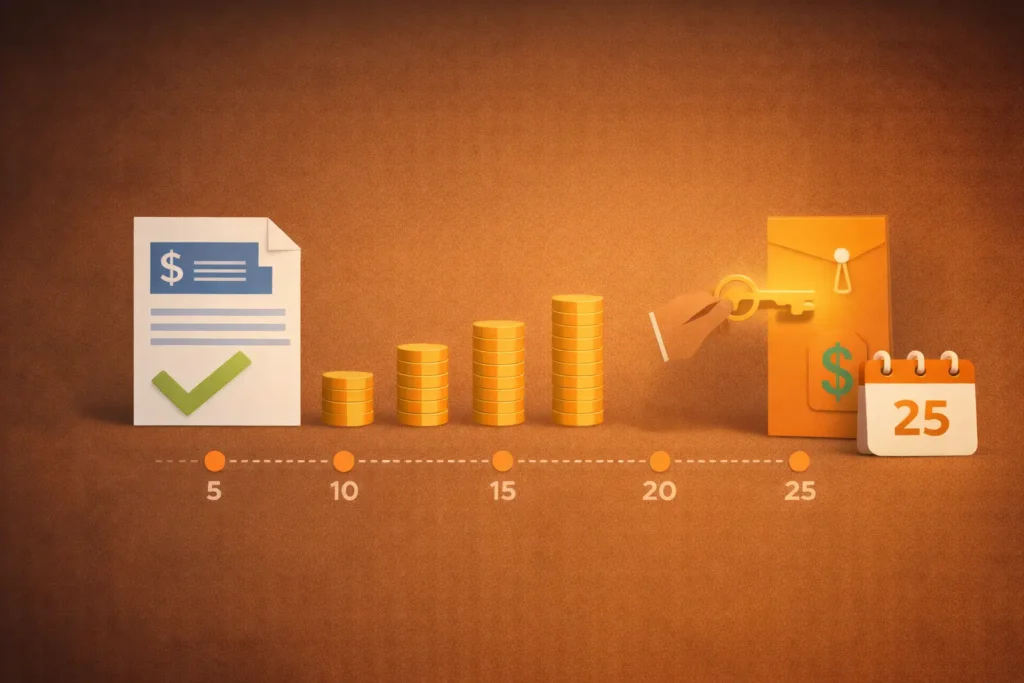
Borrowers with federal student loans enrolled in an eligible IDR plan who make qualifying payments for 20–25 years qualify for forgiveness.
Eligibility Requirements
To qualify, you must:
- Have eligible federal student loans
- Enroll in an IDR repayment plan
- Recertify income annually
- Make qualifying monthly payments
- Remain in good standing (no default)
Private loans do not qualify. Learn the difference here:
Federal vs Private Student Loans
Eligible Loan Types
- Direct Subsidized Loans
- Direct Unsubsidized Loans
- Direct PLUS Loans (with conditions)
- Consolidation Loans (if repaid under IDR)
So the bottom line is: If you have federal loans and stay in an IDR plan long-term, you’re likely eligible for eventual forgiveness.
How Long Does It Take to Get IDR Forgiveness?
IDR forgiveness occurs after 20 years for undergraduate loans and 25 years for graduate or PLUS loan borrowers.
Forgiveness Timeline Comparison
| Plan | Forgiveness Timeline | Eligible Loans |
| PAYE | 20 years | Undergrad loans |
| SAVE | 20–25 years | All Direct loans |
| IBR (new) | 20 years | New borrowers |
| IBR (old) | 25 years | Older borrowers |
| REPAYE | 20–25 years | Mixed loan types |
Important Insight
Time in repayment includes months where payments were $0 due to low income. These still count as qualifying months.
Here’s what matters: Forgiveness timeline depends on loan type and plan, but typically ranges between 20 and 25 years.
How Are Monthly Payments Calculated Under IDR?
IDR payments are calculated as a percentage of discretionary income, typically 5%–15%, depending on the plan.
Payment Formula
Discretionary Income = Adjusted Gross Income − Poverty Guideline Threshold
Your monthly payment is then:
- 5% (SAVE Plan for undergrad loans)
- 10% (PAYE and REPAYE)
- 10%–15% (IBR depending on loan date)
Real Example
If discretionary income = $20,000
Payment at 10% = $2,000/year → $166/month
This makes IDR ideal for borrowers with high debt and modest income.
In short, payments are income-adjusted, making them affordable and aligned with your financial situation.
Is Income-Driven Repayment Forgiveness Automatic?
Yes, forgiveness is automatic after the required qualifying payments, but borrowers must remain enrolled and recertify income annually.
Annual Recertification Matters
Each year, you must submit income and family size updates. Missing recertification can:
- Increase monthly payments
- Reset progress tracking
- Delay forgiveness eligibility
Learn more about repayment structures here:
Income-Driven Repayment IDR Plans Explained
Quick Summary
So, forgiveness is automatic—but only if you stay enrolled, certify income yearly, and make qualifying payments.
Do You Pay Taxes on IDR Forgiveness?
IDR forgiveness may be taxable as income, though temporary federal exemptions currently waive tax liability until at least 2025.
Tax Treatment Explained
Forgiven loan balance may count as “taxable income” unless exempted by federal law. This is called the “tax bomb.”
Example:
$80,000 forgiven → could be taxed as income depending on IRS rules.
Always confirm with official guidance:
According to the official federal repayment guidance:
Income-Driven Repayment Plans Overview
Here’s what matters: Forgiveness may be tax-free depending on law updates, so long-term planning is essential.
IDR Forgiveness vs Public Service Loan Forgiveness (PSLF)

IDR forgiveness takes 20–25 years, while PSLF forgives the remaining balance after 10 years of qualifying public service payments.
Comparison Table
| Feature | IDR Forgiveness | PSLF |
| Timeline | 20–25 years | 10 years |
| Job Requirement | None | Public service only |
| Taxable | Possibly | Tax-free |
| Payment Basis | Income-based | Income-based |
| Best For | Long-term repayment | Government/nonprofit workers |
If you’re working in public service, PSLF may be faster.
In short, PSLF is quicker but job-restricted, while IDR forgiveness is universal but slower.
What Happens If You Miss Payments Under IDR?
Missing payments can delay forgiveness progress, but enrolling in deferment or forbearance may preserve long-term eligibility.
Consequences of Missed Payments
- Qualifying month not counted
- Interest may capitalize
- Timeline toward forgiveness extended
If loans default, collection begins:
How Student Loans Are Collected
So the key point is: Missed payments don’t cancel eligibility but will slow forgiveness progress significantly.
Strategic Tips to Maximize Income-Driven Repayment Forgiveness
Lower taxable income, recertify annually, avoid capitalization, and choose the optimal IDR plan to maximize forgiveness benefits.
Smart Optimization Strategies
- Choose SAVE the plan for the lowest payment percentage
- File taxes strategically (Married Filing Separately may help)
- Recertify income on time
- Avoid leaving the IDR plan
- Track the qualifying payment count yearly
Advanced Strategy
Borrowers with high balances relative to income gain the most long-term forgiveness benefit.
Here’s what matters: Strategic enrollment and income management can significantly increase the forgiven balance.
Can Private Student Loans Qualify for IDR Forgiveness?
No, private student loans are not eligible for income-driven repayment forgiveness programs.
Private loans operate under lender-defined terms. Options may include refinancing or settlement:
Private Student Loan Settlement Guide
So, only federal student loans qualify; private loans require alternative relief strategies.
Step-by-Step: How to Apply for IDR Forgiveness
Enroll in an IDR plan, submit income certification annually, make qualifying payments, and remain enrolled until the forgiveness timeline is completed.
Step-by-Step Process
- Confirm loan eligibility (federal loans only)
- Apply for the IDR plan online
- Submit income and family size documentation
- Make qualifying monthly payments
- Recertify annually
- Receive automatic forgiveness after the timeline
If facing legal challenges, see:
Student Loan Bankruptcy Process Step-by-Step
In short, enroll, recertify, stay consistent, and forgiveness will occur automatically at the end of the required period.
Common Mistakes That Delay IDR Forgiveness
The most common mistakes include missing recertification deadlines, switching plans frequently, and misunderstanding qualifying payment rules.
Top Errors to Avoid
- Forgetting annual income recertification
- Switching out of the IDR plan
- Consolidating loans without understanding the reset rules
- Ignoring payment tracking
For legal dispute strategies, read:
How to File an Adversary Proceeding
Bottom line: Consistency and accurate documentation are critical for reaching forgiveness successfully.
Final Takeaway – Is Income-Driven Repayment Forgiveness Worth It?
Yes, IDR forgiveness is worth it for borrowers with high debt-to-income ratios who cannot repay loans fully within standard repayment timelines.
If your income is low relative to your loan balance, IDR forgiveness can dramatically reduce your lifetime repayment burden. However, borrowers expecting high income growth may repay loans faster without relying on forgiveness.
To explore your best repayment strategy, visit:
Home – Federal Student Loan Debt Help
FAQ Section
1. What is income-driven repayment forgiveness?
Income-driven repayment forgiveness cancels the remaining federal student loan balance after 20–25 years of income-based payments.
2. How long does IDR forgiveness take?
Most borrowers receive forgiveness after 20 years (undergraduate loans) or 25 years (graduate loans).
3. Is IDR forgiveness automatic?
Yes, forgiveness is automatic once qualifying payments and enrollment requirements are met.
4. Do $0 payments count toward forgiveness?
Yes, months with a $0 required payment due to low income still count toward qualifying payment months.
5. Is IDR forgiveness taxable?
It may be taxable depending on federal tax law, though temporary exemptions may apply.
6. Can I switch IDR plans without losing progress?
Usually yes, but certain consolidations or plan changes may reset the qualifying payment count.
7. Should I contact a specialist before applying?
Yes, personalized analysis can optimize long-term forgiveness benefits.
Contact Us for Loan Guidance