Most federal programs forgive student loans after 10–25 years, depending on repayment plan eligibility, employment status, and consistent qualifying payments. However, private lenders usually do not cancel loans, so borrowers must rely on settlement, hardship relief, or legal discharge strategies.
Quick Summary
- Federal forgiveness timelines range from 10 to 25 years
- PSLF cancels debt after 120 qualifying payments (about 10 years)
- Income-driven repayment plans forgive balances after 20–25 years
- Private lenders rarely cancel loans automatically
- Bankruptcy or legal discharge may shorten the repayment timeline
Why Borrowers Ask: When Will My Student Loans Be Forgiven?
Many borrowers feel overwhelmed by long repayment periods and constant interest growth. Therefore, they naturally ask how long forgiveness actually takes. The truth is simple: structured federal programs forgive loans only after borrowers meet strict eligibility rules and complete required payment timelines.
To understand the full legal and repayment framework, start with the complete overview on our student debt legal relief hub
What Determines How Long Student Loans Take to Be Forgiven?
Several key factors directly control forgiveness timelines. First, the type of loan matters most. Next, the repayment plan, payment history, and employment eligibility all influence how quickly borrowers reach cancellation milestones.
For example, federal and private loans follow completely different relief paths. You can explore this difference in detail in our guide on federal vs private student loans explained clearly
Forgiveness timelines depend on program eligibility rather than simply waiting for a certain number of years.
Do Student Loans Get Forgiven After 10 Years?
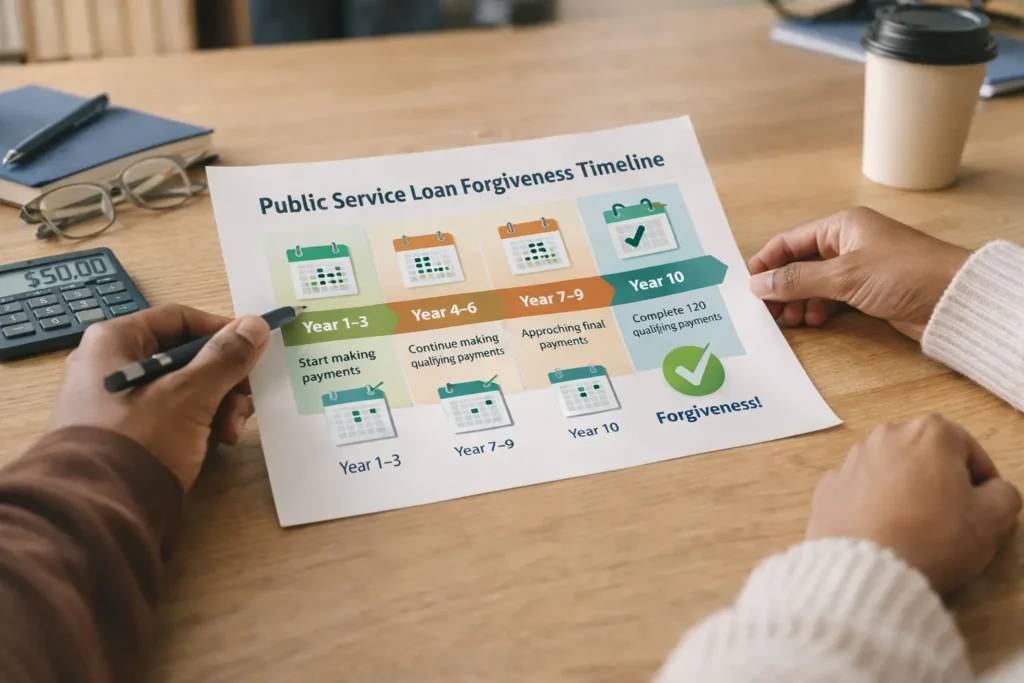
First, let’s examine the fastest forgiveness route available to federal borrowers. The Public Service Loan Forgiveness (PSLF) program cancels remaining federal student loan balances after borrowers complete 120 qualifying monthly payments while working for a qualified public service employer.
PSLF Core Requirements
- Full-time work at a government or nonprofit organization
- Enrollment in an income-driven repayment plan
- Direct federal loans only
- 120 qualifying on-time payments
If complications arise during repayment, borrowers sometimes need legal intervention. In those cases, understanding how to file an adversary proceeding to challenge student loan discharge issues becomes crucial.
Timeline Breakdown
| Years | Progress Stage |
| 1–3 years | Early qualifying payments build eligibility |
| 4–7 years | The majority of the forgiveness progress achieved |
| 8–10 years | Final verification and loan cancellation review |
Therefore, PSLF offers the fastest structured forgiveness path, but borrowers must strictly follow employment and payment qualification rules.
Are Student Loans Forgiven After 20 or 25 Years?
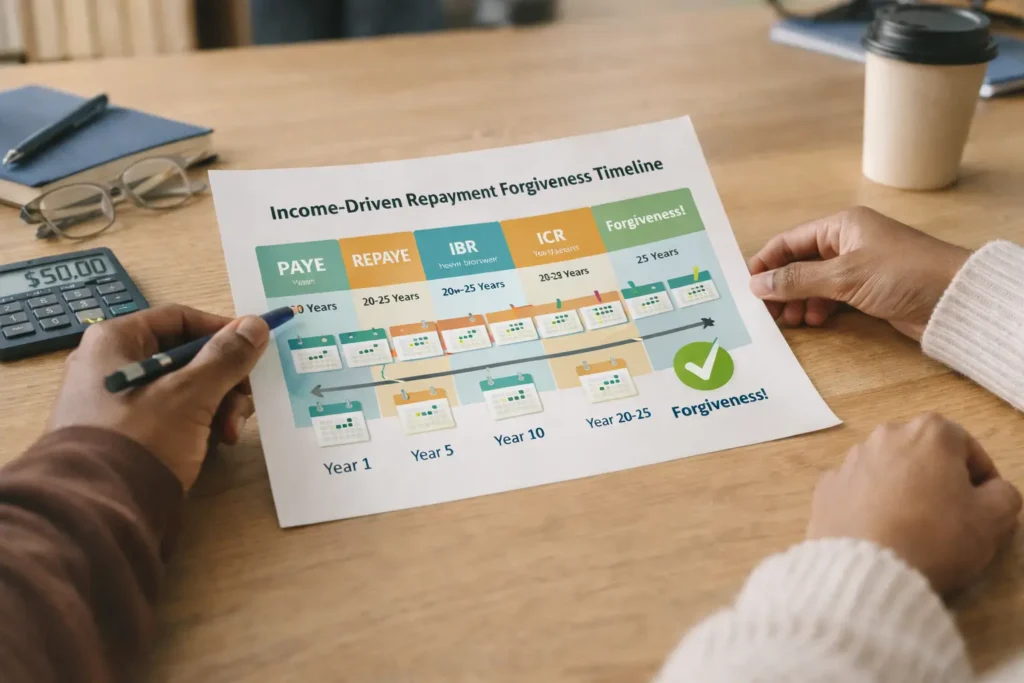
Next, we should understand how income-driven repayment plans extend forgiveness timelines. These plans gradually reduce the borrower’s required monthly payment and eventually cancel any remaining balance after long-term participation.
IDR Forgiveness Timelines
| Plan | Forgiveness Period | Best For |
| PAYE | 20 years | Lower-income borrowers |
| REPAYE | 20–25 years | High loan balances |
| IBR | 20–25 years | Older federal loans |
| ICR | 25 years | Parent PLUS borrowers |
Moreover, payment consistency and collection status can influence eligibility progress. You can learn how default and recovery affect timelines in our guide on how student loans are collected and enforced legally
So, while IDR forgiveness takes longer than PSLF, it remains a reliable option for borrowers across all professions.
Can Private Student Loans Ever Be Forgiven?
However, the situation changes significantly when we look at private student loans. Private lenders rarely cancel debt through structured programs. Instead, they usually negotiate settlements or require legal discharge strategies.
Possible Relief Paths for Private Loans
- Lump-sum settlement negotiation
- Hardship-based repayment adjustments
- Bankruptcy discharge litigation
- Court-approved adversary proceedings
Borrowers who face high balances often explore private student loan settlement strategies that reduce total repayment obligations
Additionally, lenders sometimes use court-authorized wage deductions to recover overdue balances. This legal collection method is known as wage garnishment in debt recovery law
In contrast to federal programs, private lenders rarely offer fixed forgiveness timelines, so borrowers must rely on negotiation or legal relief strategies.
How Bankruptcy Affects Student Loan Forgiveness Timeline
Meanwhile, some borrowers explore bankruptcy as a legal strategy to shorten repayment timelines. Bankruptcy courts do not automatically cancel student loans. However, they may discharge balances if borrowers prove undue hardship through litigation.
To understand the full legal process, review our detailed guide on student loan bankruptcy discharge relief and legal options
Consequently, bankruptcy alone does not guarantee forgiveness, but it can significantly accelerate debt discharge when courts approve hardship claims.
Federal vs Private Student Loan Forgiveness Timeline Comparison
Ultimately, comparing federal and private loans clarifies why forgiveness timelines differ so dramatically.
| Loan Type | Typical Forgiveness Timeline | Main Relief Path |
| Federal Loans | 10–25 years | PSLF or IDR programs |
| Private Loans | No fixed timeline | Settlement or legal discharge |
| Defaulted Loans | Varies widely | Rehabilitation or negotiation |
Therefore, federal programs provide predictable cancellation schedules, whereas private loans depend on negotiation strength and legal strategy.
When Are Student Loans Actually Forgiven?
Finally, we can summarize the exact timelines borrowers should expect. Structured federal programs forgive student loans only after borrowers complete strict qualification requirements and payment milestones.
- 10 years → PSLF program completion
- 20 years → PAYE or REPAYE forgiveness
- 25 years → IBR or ICR forgiveness
- No fixed timeline → Private loan settlement or legal discharge
If you want personalized help estimating your forgiveness timeline, contact our legal support team through the student loan relief consultation page
FAQ
Do student loans get forgiven after 20 years?
Yes, income-driven repayment plans cancel remaining federal loan balances after 20 years of qualifying payments for eligible borrowers.
How many years until student loans are wiped out?
Typically, federal programs forgive loans within 10–25 years, depending on PSLF eligibility or IDR enrollment.
Are private student loans ever forgiven?
Private lenders rarely cancel balances automatically; however, borrowers may reduce or discharge debt through settlements or legal hardship proceedings.
Is PSLF the fastest forgiveness option?
Yes, PSLF usually cancels federal student loans after 120 qualifying monthly payments, which equals roughly 10 years.
Can bankruptcy eliminate student loans sooner?
Sometimes. Courts may discharge loans earlier if borrowers successfully prove undue hardship through adversary proceedings.