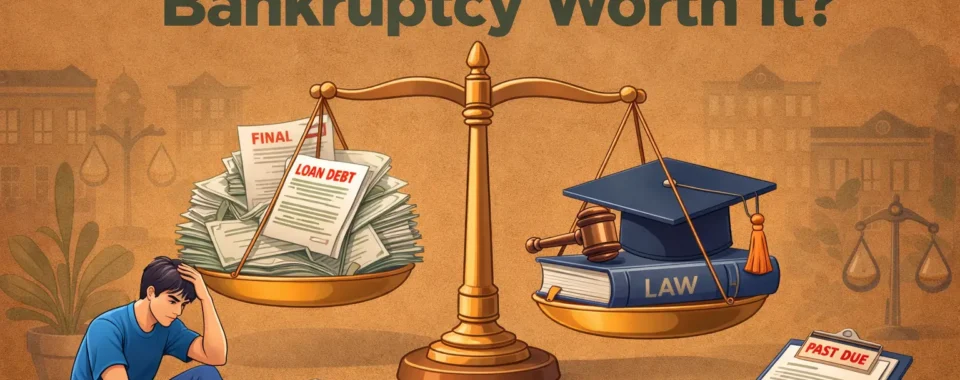
Is Student Loan Bankruptcy Worth It? Pros, Cons, Eligibility, and Alternatives Explained
In most cases, student loan bankruptcy is only worth it if you can prove long-term financial hardship and have no realistic repayment options. It’s difficult but possible—especially for borrowers facing permanent disability, low income, or overwhelming debt.
If you’re exploring broader repayment or relief strategies, start with our in-depth resource: Student Loan Help & Relief Options.
Quick Summary: Is Student Loan Bankruptcy Worth It?
- Student loan bankruptcy is possible in the U.S., but it requires proving undue hardship.
- Federal loans are harder to discharge than credit cards or medical debt.
- You must file an adversary proceeding inside the bankruptcy court.
- Athe lternatives like IDR plans or settlement may be safer and less damaging.
- Bankruptcy can hurt your credit for 7–10 years.
Understanding Student Loan Bankruptcy in the United States
What Does “Student Loan Bankruptcy” Mean?
Student loan bankruptcy refers to discharging student debt through Chapter 7 or Chapter 13 bankruptcy by proving undue hardship in court.
Student loan bankruptcy is different from eliminating credit card or medical debt. Under U.S. law, education loans require a separate lawsuit within the bankruptcy case called an adversary proceeding.
According to this detailed overview on Student loans – Wikipedia, education loans are treated differently because policymakers historically viewed them as investments in human capital.
Why Is It So Hard to Discharge Student Loans in Bankruptcy?
Undue hardship means you cannot maintain a minimal standard of living while repaying loans now or in the foreseeable future.
Courts often apply the Brunner Test, which requires you to prove:
- You cannot maintain a minimal living standard.
- Your financial situation is unlikely to improve.
- You made good-faith efforts to repay.
This makes student loan discharge significantly more difficult than other debt types.
If you’re unsure how interest and compounding make your balance worse, see:
How student loan interest works in the U.S.
Chapter 7 vs Chapter 13: Which Bankruptcy Applies to Student Loans?
Yes, but only if you win an adversary proceeding proving undue hardship.
| Feature | Chapter 7 | Chapter 13 |
| Timeline | 3–6 months | 3–5 years |
| Asset Risk | Possible liquidation | Structured repayment |
| Student Loan Discharge | Requires hardship proof | Requires hardship proof |
| Credit Impact | Severe | Severe but structured |
Chapter 7 wipes most unsecured debts quickly.
Chapter 13 creates a court-approved repayment plan.
For comparison between loan types, read:
Federal vs Private Student Loans Explained
Is It Easier to Discharge Private Student Loans in Bankruptcy?
Sometimes yes—private loans may be easier if they don’t meet federal education loan definitions.
Private lenders don’t offer income-driven repayment or forgiveness programs. In some cases, courts have discharged private student loans if they exceeded tuition costs.
If you’re considering negotiation instead, explore:
Private Student Loan Debt Settlement Options
Alternatives to Student Loan Bankruptcy You Should Try First
1. Income-Driven Repayment (IDR) Plans
IDR plans cap payments based on income and may lead to forgiveness after 20–25 years.
Learn more here:
Income-Driven Repayment (IDR) Plans Explained
2. Loan Consolidation as a Pre-Bankruptcy Strategy
Simplifies payments but may increase total interest.
3. Private Student Loan Settlement Options
Negotiate lump-sum reductions.
4. Total & Permanent Disability Discharge
Available for qualifying borrowers.
Before bankruptcy, exhaust IDR, deferment, or settlement options. Courts expect proof you tried alternatives.
How Student Loan Bankruptcy Affects Your Credit Score
Chapter 7 remains for 10 years; Chapter 13 remains for 7 years.
Effects include:
- Lower credit score
- Difficulty qualifying for mortgages
- Higher interest rates
However, some borrowers see score improvement within 2–3 years if they rebuild responsibly.
Cost of Filing Student Loan Bankruptcy in the U.S.
| Expense Type | Estimated Cost (U.S.) |
| Court Filing Fee | $300–$350 |
| Attorney Fees | $1,500–$4,000+ |
| Adversary Proceeding | Additional legal fees |
In short: It’s expensive and uncertain.
Who Should Consider Student Loan Bankruptcy?
Borrowers with permanent disability, extremely low income, or no realistic future earning potential.
Ideal candidates:
- Seniors on Social Security
- Disabled individuals
- Long-term unemployed
If your balance keeps growing due to compounding, see:
Why Student Loans Grow So Quickly in the United States
Real-World Example: When Student Loan Bankruptcy Works
Sarah, age 58, owes $180,000 in federal student loans. She earns $1,200/month on disability benefits. After proving permanent hardship and failed repayment attempts, the court discharged part of her loan.
But many applicants are denied.
Here’s what matters: documentation, consistency, and proof.
Bankruptcy vs IDR vs Settlement: Which Option Is Better?
| Factor | Bankruptcy | IDR Plan | Settlement |
| Credit Damage | Severe | Minimal | Moderate |
| Forgiveness | Possible | After 20–25 yrs | Immediate reduction |
| Legal Process | Required | No | No court needed |
| Risk Level | High | Low | Medium |
Key Definitions Related to Student Loan Bankruptcy
- Student Loan Bankruptcy is a legal process that may discharge education debt after proving undue hardship.
- An adversary proceeding is a lawsuit within bankruptcy court.
- Undue Hardship refers to the inability to maintain minimal living standards.
Frequently Asked Questions About Student Loan Bankruptcy
Can you wipe out student loans in bankruptcy?
Yes, but only by proving undue hardship through a court process.
Are federal student loans dischargeable?
Rarely, but recent policy updates make it slightly more possible with documentation.
Does bankruptcy erase private student loans?
Sometimes, especially if they don’t meet federal definitions.
Is it better to settle or file for bankruptcy?
Settlement is less damaging but depends on lender cooperation.
Will filing for bankruptcy stop wage garnishment?
Yes, temporarily through an automatic stay.
Is It Worth It?
In short, student loan bankruptcy is a last-resort strategy. It’s worth considering only when:
- Income-driven plans fail
- Debt exceeds earning potential
- Hardship is long-term
For most borrowers, structured repayment or negotiation is safer.