Quick Summary
- Subsidized student loans don’t accrue interest while you’re in school.
- Unsubsidized loans start accumulating interest immediately.
- Both are federal student loans, but eligibility depends on financial need.
- Subsidized loans are cheaper over the long term, but borrowing limits are lower.
- Choosing the right loan can reduce total repayment by thousands of dollars.
What is the difference between subsidized and unsubsidized student loans?
Subsidized student loans are need-based and don’t accrue interest while you’re in school, whereas unsubsidized loans accrue interest from day one and are available regardless of financial need.
Why Understanding Student Loan Types Matters More Than Ever
If you’re confused about why your student loan balance keeps growing—even before graduation—you’re not alone. Many borrowers don’t realize that the loan type alone can determine how fast debt grows, especially in the U.S. education system.
Before comparing repayment plans or refinancing options, you need to understand how interest really works.
For a deeper breakdown, see our guide on
Why do student loans grow so quickly in the United States
What Are Subsidized Student Loans?
Subsidized loans are federal student loans in which the government pays interest while students are in school and during deferment periods.
Key Features of Subsidized Loans
- Need-based eligibility
- Interest covered while:
- You’re enrolled at least half-time
- During the grace period
- During deferment
- Lower total repayment cost
Who Qualifies for Subsidized Loans?
Eligibility depends on:
- FAFSA results
- Demonstrated financial need
- Undergraduate enrollment only
In short: If you qualify, subsidized loans are the cheapest student loan option available.
What Are Unsubsidized Student Loans?
Unsubsidized loans accrue interest from the moment they’re disbursed, regardless of enrollment or financial need.
Key Features of Unsubsidized Loans
- Not need-based
- Available to:
- Undergraduate students
- Graduate students
- Interest accrues immediately
- Interest can capitalize if unpaid
For a deep dive into interest mechanics, check
How student loan interest works
Subsidized vs Unsubsidized Student Loans: Side-by-Side Comparison
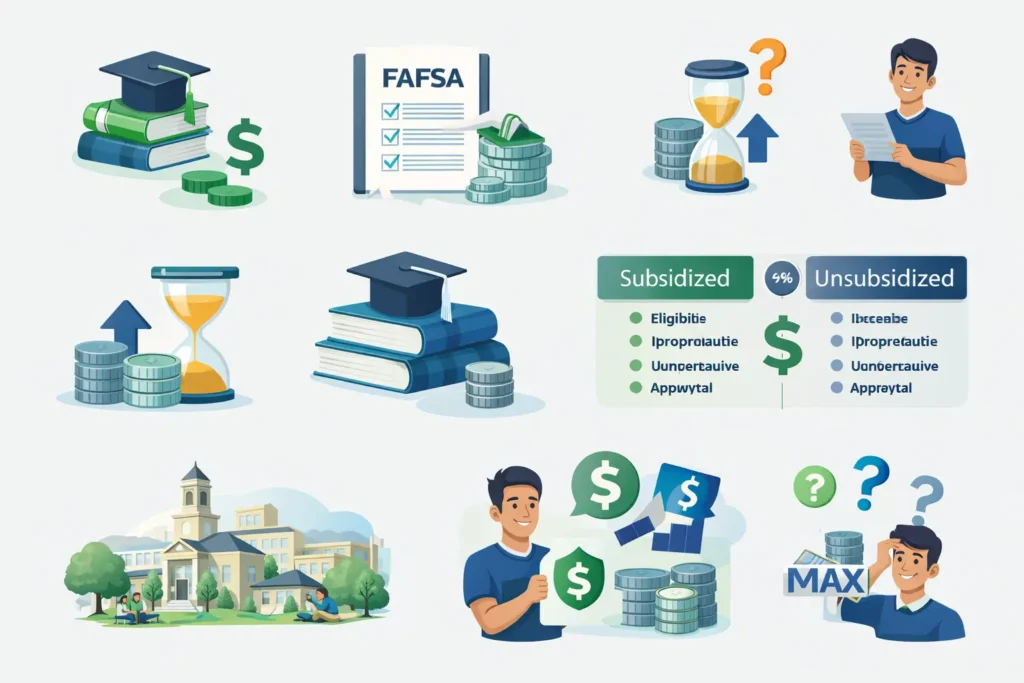
| Feature | Subsidized Loans | Unsubsidized Loans |
| Financial Need Required | ✅ Yes | ❌ No |
| Interest During School | ❌ No | ✅ Yes |
| Government Pays Interest | ✅ Yes | ❌ No |
| Available for Grad School | ❌ No | ✅ Yes |
| Total Cost Over Time | Lower | Higher |
Subsidized loans save money over the long term, but unsubsidized loans offer broader access.
Which Student Loan Is Better for You?
Subsidized loans are better if you qualify, but unsubsidized loans help fill funding gaps when aid falls short.
Choose Subsidized Loans If:
- You qualify based on FAFSA
- You want minimal interest growth
- You’re an undergraduate student
Choose Unsubsidized Loans If:
- You don’t qualify for need-based aid
- You’re a graduate or professional student
- You need additional funds beyond subsidized limits
So the bottom line is: most students use both.
How Interest Accumulation Changes Your Total Debt
Interest capitalization is one of the biggest reasons borrowers feel trapped.
Example:
- Borrowed: $20,000 unsubsidized
- Interest accrued during school: $2,400
- New principal after capitalization: $22,400
This makes repayment harder—especially without the right strategy.
See repayment options explained here
income-driven repayment (IDR) plans explained
Federal vs Private Loans: Where Do These Fit?
Both subsidized and unsubsidized loans fall under federal student loans, which generally offer:
- Income-driven repayment
- Deferment & forbearance
- Forgiveness programs
For comparison with private loans, read
federal vs private student loans
Can You Have Both Subsidized and Unsubsidized Loans?
Yes, many students receive a mix of subsidized and unsubsidized federal loans.
FAFSA typically awards:
- Subsidized loans first
- Unsubsidized loans next
In short, unsubsidized loans often act as a backup funding source.
Common Mistakes Students Make When Choosing Loans
- Ignoring interest accrual
- Borrowing maximum limits without a plan
- Not understanding capitalization
- Skipping repayment strategy education
If debt feels overwhelming, explore
student loan help resources
For a general definition of student loans, see
The Wikipedia explanation of student loans
FAQs — People Also Ask
Is a subsidized or an unsubsidized loan better?
Subsidized loans are better because they don’t accrue interest while you’re in school, reducing your total repayment.
Do unsubsidized loans accrue interest while in school?
Yes, interest starts accruing immediately after disbursement.
Can I avoid interest on unsubsidized loans?
Only by paying interest while in school to prevent capitalization.
Are unsubsidized loans forgiven?
They may qualify under federal forgiveness programs depending on the repayment plan.
Should I contact someone for help choosing loans?
Yes—professional guidance can prevent costly mistakes.
Contact our student loan help team
What Really Matters
Subsidized vs unsubsidized student loans aren’t just a technical distinction—it’s a long-term financial decision. Understanding interest timing, eligibility, and repayment options can save you years of stress and thousands of dollars.
Next best step:
Explore all resources on our homepage